I apologize for the inconsistent pace of the book reviews on here. I hope to have a more regular schedule in the future, but time will tell.
This time I'm looking at a book that I read a few weeks ago -
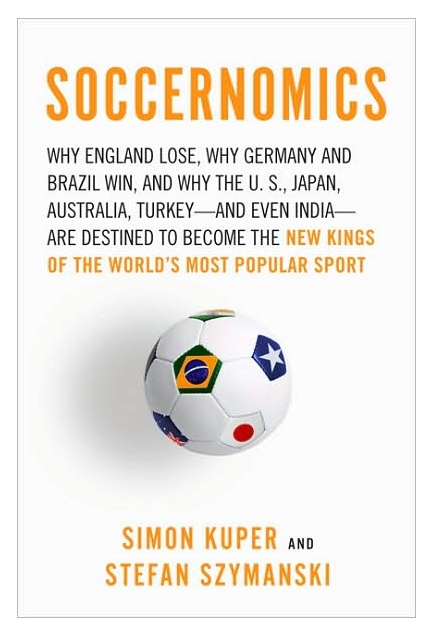
Soccernomics by Simon Kuper and Stefan Syzmanski. As you might imagine from the title, this book is about the world's most popular sport. That said, it is not as much about economics as you might imagine. Oh, there is certainly a lot of discussion of the economic factors that surround and involve this game, but there is also a lot more here.
There's certainly a
Moneyball aspect to this book, as the authors try to deconstruct a lot of the assumptions and common theories about the game (for instance, England is not nearly so much of an underachiever as its fans often believe) by applying more objective statistical analysis in favor of subjective analysis . The authors also attempt to dissect the factors that go into national success on the soccer pitch and examine what they tell us about countries that have embraced the game and those that have not.
I think soccer fans will appreciate the analysis of what goes into strong team performance, which nations' players tend to be good bargains for pro teams, and how the buying and selling of players operates (both how people think it operates and how it really appears to operate). Even those of us who don't really enjoy soccer may still be entertained by the discussion, as these two authors are quite engaging as writers.
It's not a flawless work, though. Some of the conclusions are rather obvious - discriminating against players based on race impairs top performance, for instance. In other cases, I wonder if the authors underestimate cultural factors when they make predictions about countries destined to rise or fall in the soccer world. Sure, the U.S.
could be a future force in soccer (just like they could be a future force in hockey, sumo wrestling, or cricket), but the authors don't do enough in my opinion to explore why that may well not happen - namely, not enough people care about those sports at the highest levels. It's one thing to sign Junior up for soccer in the summer; it's another thing to buy season tickets to an MLS club.
I was surprised to read the extent to which soccer is
not a big business ... or at least not a profitable business. The NFL and NBA roll around in money but soccer clubs do not appear to make much at all, and international events like the World Cup do little to stimulate economic progress (that's not really a surprise, given the history of the Olympics). Here too, though, it would have been interesting to read more about the follow-on gains from soccer - surely companies like Nike, Adidas, BSkyB, and the like make money from their involvement in the game.
All in all, it was interesting and informative book. Even if you are not interested in sports, this is an engaging book for how it addresses widely-held assumptions and teases out the truth through more rigorous fundamental analyses. Certainly there is value in that exercise - the more effective you are in challenging and testing your own assumptions, the better investor you will be.